
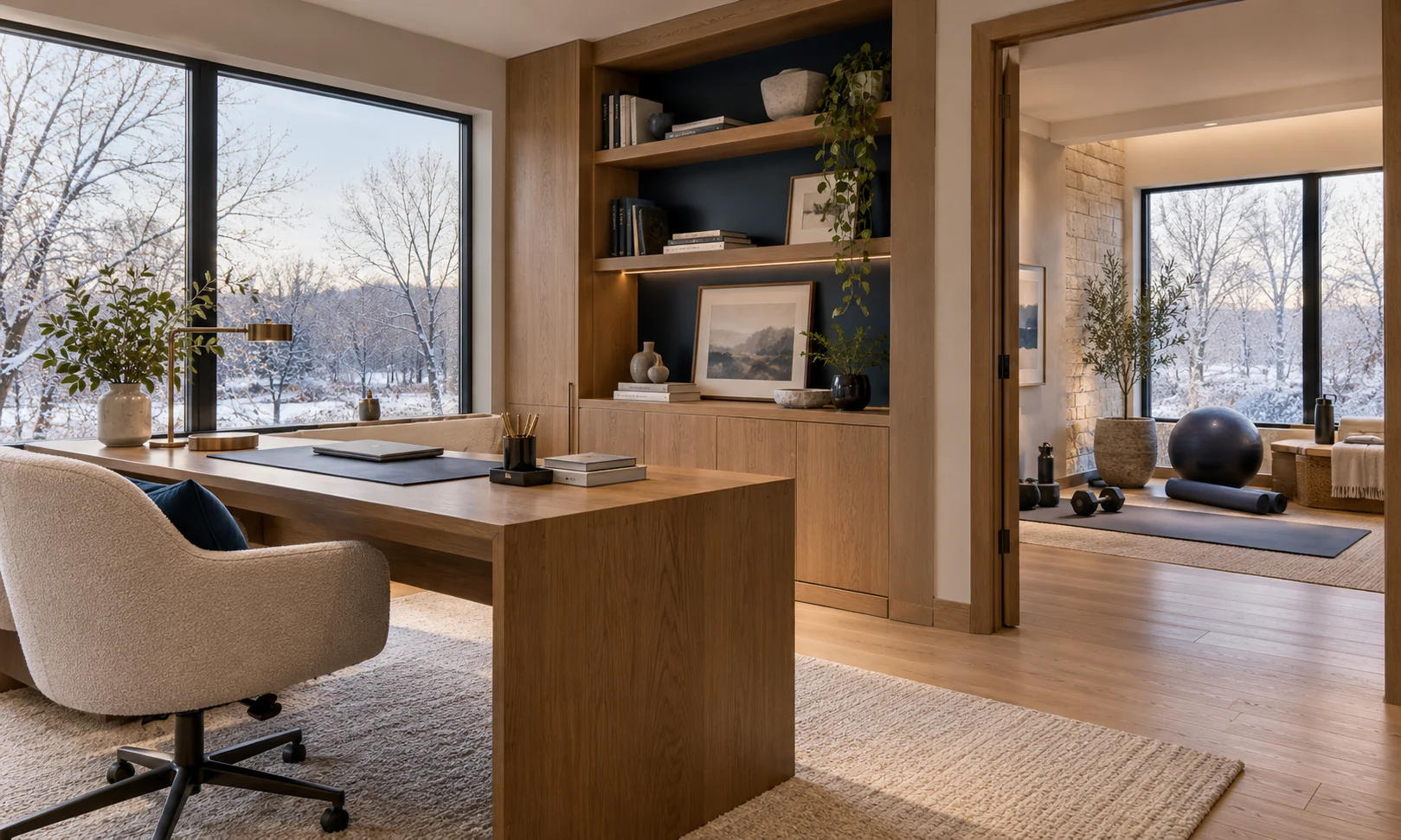
Compare quiet workspaces, fitness space, river-valley access, winter comfort and travel-friendly ownership before choosing an Edmonton luxury home. This guide is intended as general background—not a substitute for property-specific financial, legal, municipal or professional advice.
Start with an ordinary week, not a special occasion
A dramatic entrance can make a strong first impression, but the better home is the one that works on an ordinary Tuesday. Write down a typical working day, a weekend at home and a week when you are away. Consider arrival times, quiet work, meal preparation, exercise, guests, deliveries and outdoor upkeep. Choose three essentials and three preferences before viewing. This is useful whether your schedule involves a clinic, an engineering office, a business, remote work or something entirely different. Occupation and asking price do not tell us what a household needs.
Test the quiet workspace and the private retreat
A room labelled office may still sit beside the kitchen, a busy entrance or a mechanical room. During a viewing, close the door and consider daylight, background noise, sightlines, storage and where video calls would happen. Check internet service at the exact address with a provider rather than assuming the neighbourhood has a particular connection. If you work unusual hours, think about separation between sleeping, entertaining and active spaces. Walk through the home as if different people were using those rooms at the same time.
Plan fitness and relaxation space around real equipment
Measure the equipment you actually intend to use, including movement space, ceiling clearance, access routes and storage. A beautifully staged gym photograph does not establish floor capacity, ventilation or the suitability of an electrical installation. Discuss equipment loads and proposed alterations with the appropriate qualified contractors. For a sauna, steam room, pool or substantial wet-area project, request the existing work history and obtain property-specific design, permit, servicing and maintenance advice before committing to an upgrade. These are space and ownership questions; an amenity should not be presented as a medical benefit.
Check the actual route to the river valley
Edmonton’s trail network can be part of a daily routine, but a river-valley view and a convenient trail entrance are different things. The City publishes trail maps, slope information and current caution/closure resources. Use those tools, then check the public route from the address: entrances, crossings, elevation changes and the surfaces you expect to use. Consult current conditions before a visit. Avoid promising that a particular trail is always open or maintained in the same way throughout winter. A verified route is more useful than an unsupported steps-from-nature claim.
Look beyond finishes when comparing winter comfort
Ask about heating and cooling equipment, service history, ventilation, windows and any available energy evaluation. Visit different parts of the home and record questions for your inspector rather than diagnosing performance during a short showing. Natural Resources Canada explains that an EnerGuide evaluation assesses how a home uses energy and provides a rating and report to inform possible upgrades. Ask whether a recent report exists and whether changes have occurred since it was prepared. An energy evaluation answers different questions from a purchase condition inspection; neither a premium finish nor a newer build is proof of a particular utility bill.
Make lower-maintenance ownership a document question
If travel or a full schedule makes exterior upkeep less appealing, compare the actual responsibilities of a detached home, townhome and condominium. Ask who handles snow, landscaping, building systems, inspections while away and urgent repairs, and what is included in each fee or contract. For a condominium, have an appropriate reviewer assess current bylaws, budgets, insurance, reserve information and other relevant corporation records. Alberta’s current condominium-document publication explains access to specified records. Lock-and-leave is a marketing description, not a promise that a home can be left unattended without obligations. Confirm insurer and management requirements for your situation.
Make a winter handover plan before travelling
Compare the work behind a low-maintenance promise. Walk the public sidewalk frontage, driveway, entrance steps and delivery route; then record who clears each surface, who checks it again after a thaw and who covers missed visits. The City of Edmonton asks property owners to remove adjacent sidewalk snow and ice promptly and explains that its bylaw does not specify a fixed removal timeframe. Do not build a travel plan around an assumed 24- or 48-hour grace period. Before leaving, confirm the actual service agreement, access arrangements and a backup contact. For a condominium, ask the manager to identify which surfaces are included rather than assuming the monthly fee covers every entrance. Our practical comparison is to record the task, responsible person, evidence of inclusion and unresolved question for each address; it is a planning aid, not a legal determination or a service guarantee.
Distinguish a winter walking route from a summer trail
A nearby route is useful only if its winter conditions suit the way you intend to use it. The City distinguishes paved river-valley trails and walkway priorities from gravel trails, which it leaves in their natural state in winter. Follow the actual connection from the home to the trail, including crossings and slopes, and check the City’s current trail and snow-clearing information. Treat maintenance priorities as operating guidance rather than a promise that a particular path will be clear when you arrive. For a Glenora, Westmount or Windermere shortlist, record the specific access point and surface type; the neighbourhood name alone does not answer that question. Apply Edmonton guidance only within its jurisdiction, and check the responsible local authority separately for a regional or lake-area property.
Test the trips and arrivals that matter to you
List the destinations you choose to use, then compare journeys at the times you normally travel. Test parking, loading, garage access, transit options and the route from vehicle to front door in poor weather. If guests or service providers visit, ask how their access works. Do not rely on one midday map estimate or a generic claim about being minutes from a hospital, airport or business district. A convenient home is personal: the same address can work very differently for two households, and travel conditions change.
Compare Edmonton neighbourhoods and regional options deliberately
Use Glenora, Windermere and Westmount as starting points for property-specific comparisons, not a ranking of residents or a promise that every home shares the same features. Our guides explain the local context and show inventory within municipal neighbourhood boundaries. Keep the city or neighbourhood selected when applying the luxury filter, then widen the map intentionally if you want more choice. Pigeon Lake can introduce a different ownership or recreation pattern; compare travel, access, services and maintenance rather than treating a lake-area property as interchangeable with a city home.
Use a simple evidence-based shortlist
For each address, record the asking price, three essential routines, a feature you have checked, the document or inspection still needed, and the cost or responsibility you must confirm. Give each essential a score from zero to two: zero for unsuitable, one for uncertain and two for demonstrated fit. Keep uncertain items visible rather than averaging them away. This is an organizational aid, not a valuation or prediction of resale performance. Begin with the Edmonton luxury collection, save a refined search if useful, and send the address and practical questions when you inquire. There is no need to send employer information, medical details or private financial statements through a public form.
Sources & further reading
- City of Edmonton — Residential Sidewalk Snow and Ice
- City of Edmonton — Trail and Walkway Snow Clearing
- City of Edmonton — Trails and Pathways
- Natural Resources Canada — EnerGuide home evaluations
- Government of Alberta — Condominium documents, updated March 2026
Sources checked October 26, 2026. Property-specific facts and requirements should be confirmed with the responsible authority.