
Preparing a Multifamily Rent Roll Before You Sell
A practical owner checklist for leases, income, expenses and document readiness.
Read the guide ↗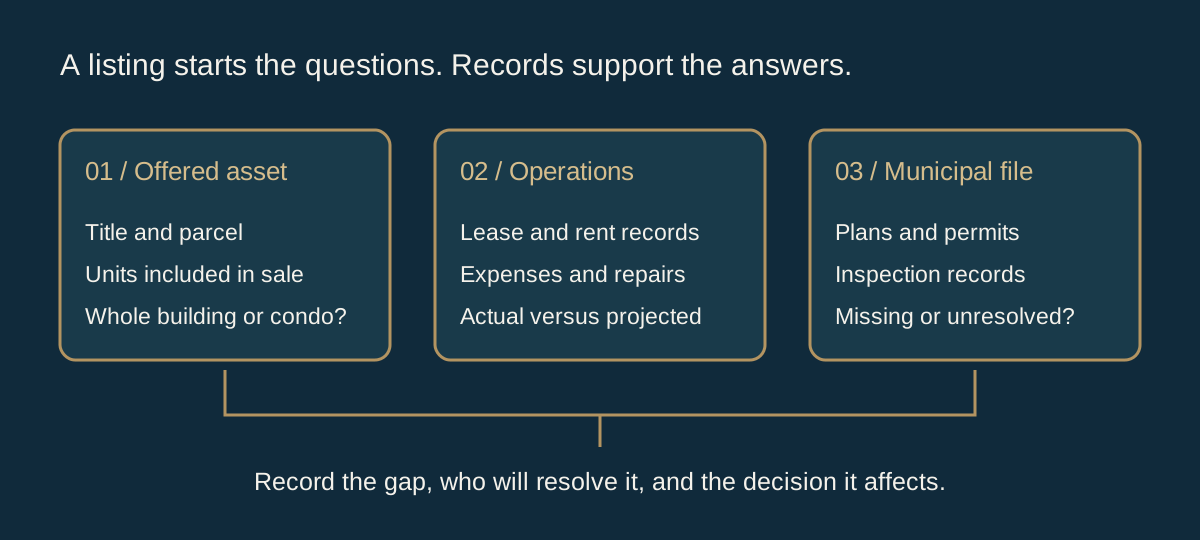
Compare the asset offered, actual income and municipal records before judging an Edmonton fourplex or apartment building by price per door. This guide is intended as general background—not a substitute for property-specific financial, legal, municipal or professional advice.
A fourplex, an apartment building and one condominium within a larger complex are different acquisitions. Start with the legal description, titles and units included in the proposed sale. A listing field describing the number of units in a condominium development does not establish that every unit is being offered. Match the advertised opportunity to the seller’s document package and ask your lawyer to review what the transaction actually includes. Keep an asset summary: address, parcel, ownership structure, included units and any unresolved discrepancy.
Use three columns for your first review: the asset offered, the current operation and the municipal file. The first describes what you would acquire; the second describes how it currently earns and spends money; the third provides available development and construction records. They answer different questions. If the listing says four units but the rent roll or available plans suggests something different, record the discrepancy rather than silently selecting the most attractive number. For Edmonton properties, connect this review to the exact address, not a general claim about what is possible in Westmount or another neighbourhood.
Request a dated unit schedule showing occupied and vacant units, contractual rent, concessions, lease dates and responsibility for utilities. Compare it with supporting income and expense records through a controlled review process. Keep in-place income, unpaid amounts, proposed rent increases and assumed future rents in separate columns. A fully leased forecast is useful as a scenario, not a substitute for current operations. Ask which expenses are recurring and which are unusual; do not omit management, insurance, taxes or routine maintenance simply because the seller currently handles a task personally.
The City’s Search of Records process can provide available filed plans, permits and past inspection results. Its page sets out request and authorization requirements and warns that some records may not be available. It also distinguishes development applications from approvals. Arrange the appropriate request with the owner or authorized representative early in the transaction. Do not treat an application, an absent online entry or the inability to locate an old plan as a final answer about a building’s approved use. Take unresolved questions to the City and the appropriate advisers.
Alongside leases, ask which inspection reports, amendments, deposit records and outstanding repair matters need review and transfer. Alberta’s tenancy guidance explains the role of move-in and move-out inspection reports and addresses repairs and rental-agreement changes. Review the applicable obligations with your adviser rather than assuming ownership turnover removes existing issues. Keep tenant names, contact information and identifying records out of public marketing and general inquiry forms. A physical building inspection and a tenancy-file review serve different purposes; neither replaces the other.
Compare unit mix, turnover timing, recurring vacancy and dependence on particular income streams. Ask for the history and expected next steps for roof, envelope, heating, plumbing and other major work. An attractive interior photograph does not establish the condition of shared systems. Record whether each concern is supported by an invoice, inspection, quote or merely an estimate. Separate immediate repairs from longer-term capital planning so the buyer can discuss an appropriate reserve approach without treating every dollar of annual income as available cash.
Bring the verified asset summary, current operating records and unresolved questions to qualified financing professionals. Ask how the property’s ownership structure, unit count, condition and current income affect the financing review. Evaluate changes in borrowing cost, vacancy and repair spending as scenarios; a price-per-door or advertised return cannot settle those questions alone. Keep the assumptions visible and obtain property-specific advice before relying on a projected outcome.
For each missing or conflicting item, record the claim, supporting document, person responsible, expected response and decision affected. Distinguish an unanswered question from a confirmed defect. Agree with your lawyer and other advisers which issues need resolution before a commitment and which can be handled through appropriate transaction terms. Use the multifamily document checklist to organize the discussion, then browse the Edmonton whole-building search. For an initial inquiry, share the address or MLS number, intended unit range and questions; private tenant or financial files can wait for an agreed secure process.
Sources checked October 27, 2026. Property-specific facts and requirements should be confirmed with the responsible authority.
A practical owner checklist for leases, income, expenses and document readiness.
Read the guide ↗Why two additional units do not tell the whole investment story.
Read the guide ↗