
Leasing Clinic, Medical Aesthetic or Spa Space in Edmonton
A property-focused checklist for permitted use, client access, room layout, building services, fit-out costs and lease conditions before choosing clinic or spa premises.
Read the guide ↗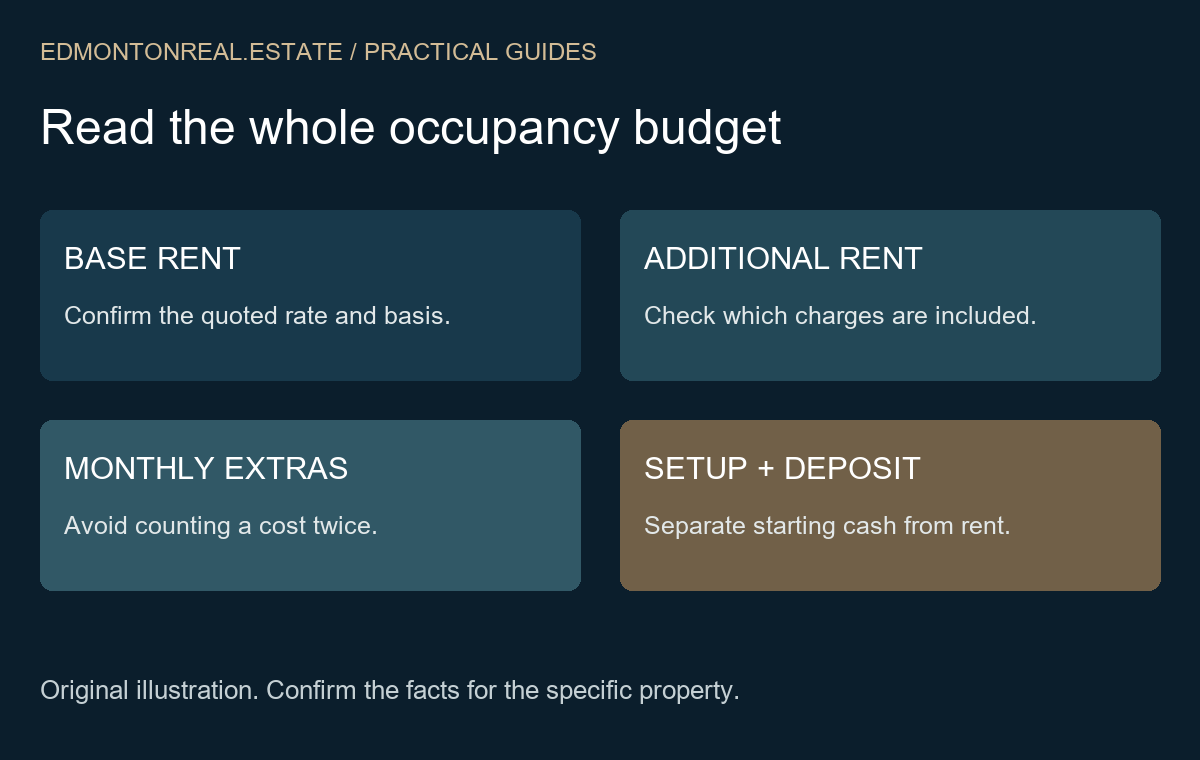
Compare the proposed restaurant operation, premises records, equipment responsibilities and full opening budget before committing to an Edmonton lease. This guide is intended as general background—not a substitute for property-specific financial, legal, municipal or professional advice.
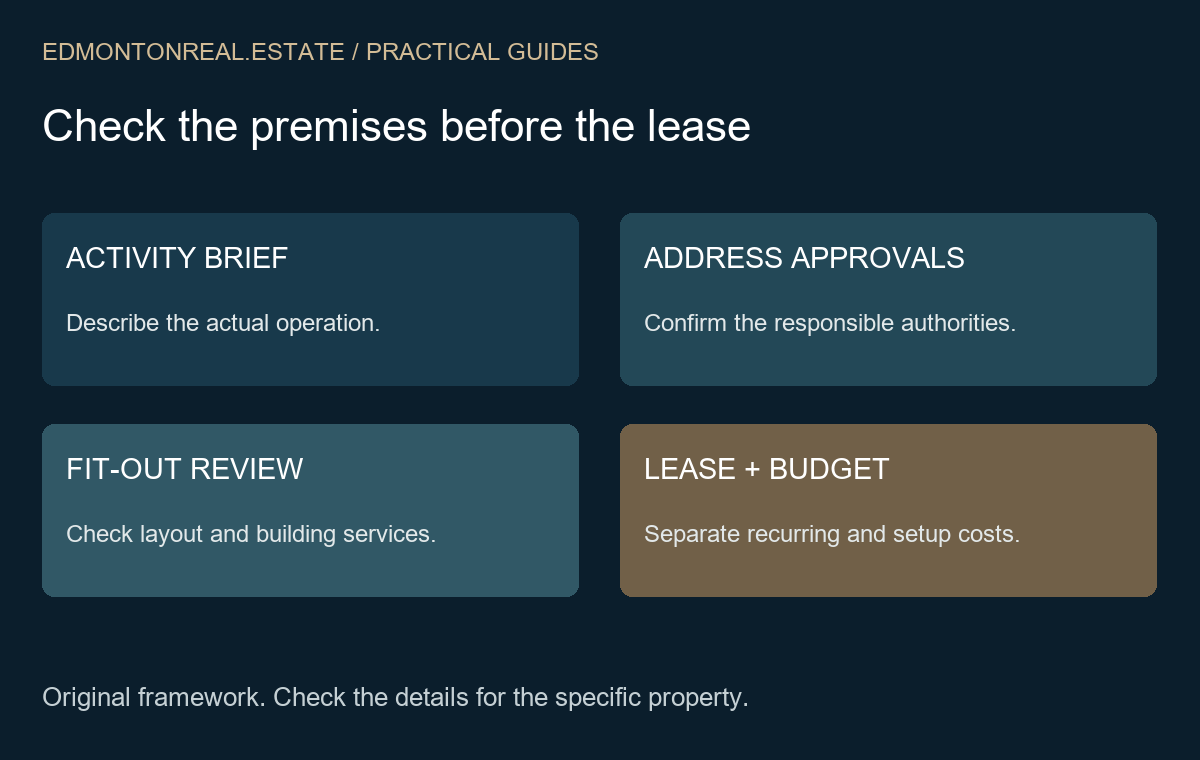
Write a short premises brief: the food concept, cooking equipment, proposed seating, service model, hours, deliveries, storage and any patio plans. A café with limited preparation and a restaurant planning substantial cooking can place different demands on a space. Use the same brief for every candidate so a low asking rent or attractive dining-room finish does not overshadow the work needed for your operation. Share this brief with the landlord and the appropriate advisers; do not rely on a listing category alone to establish suitability.
The City identifies changes in business activity, increased restaurant seating, changes to building systems and commercial cooking equipment among work requiring permits. Review the exact proposal and address with the City before assuming a former restaurant can simply reopen under a new concept. Its business-licence application is a separate process to review as well. Ask what existing records support the current configuration and what your proposed work changes. Edmonton guidance applies within the city; use the responsible municipality for a space elsewhere in the region.
Alberta Health Services publishes food-facility guidance and links to its Starting a Food Business resource and Food Handling Permit Application. Use these resources to identify the questions for Environmental Public Health about your proposed operation. A landlord’s agreement to a restaurant use does not answer every municipal or food-business question. Keep a review tracker with the issue, responsible authority or adviser, document requested and unresolved decision. Avoid describing a space as approved for your business merely because the listing mentions an existing kitchen.
Request available plans, equipment schedules, service records and information about ventilation, grease management, water, gas, electrical capacity, washrooms and relevant fire-safety systems. Have qualified professionals assess the actual equipment and intended work. Record what is present, what has been verified and what still needs investigation. A hood visible in a photograph is not a condition report or a promise that a proposed appliance can be connected. Ask how access for inspections and quotations will be arranged before relying on an informal retrofit allowance.
Ask which fixtures and equipment are included in the proposed premises agreement, which belong to a departing operator and which would require a separate purchase or rental arrangement. Request a written inventory and discuss ownership, condition, warranties, servicing and removal obligations with your advisers. Keep an equipment purchase distinct from the right to occupy the premises. The practical question is who supplies, maintains, replaces and eventually removes each item; an attractive photograph cannot resolve that allocation.
Ask your lawyer to review the permitted-use wording, exclusivities, assignment, repair responsibilities, insurance provisions and restoration obligations. Discuss how the agreement treats access for design work, necessary approvals, landlord work, tenant improvements and possession. Put the proposed milestones in order and identify what remains uncertain before choosing an opening date. A rent incentive and a construction period answer different questions; compare the written terms rather than assuming every delay is covered. This guide does not determine suitable lease conditions for a particular transaction.
Base rent is only one layer. Ask which additional-rent charges are included, what is payable separately, the quoted area and rate basis, and how utilities and other operating items are handled. Separate recurring occupancy spending from deposits, professional work, permits, equipment, construction, moving and pre-opening cash needs. Use current written quotations for the particular space, marking unknown amounts as unknown rather than zero. The lease-cost calculator can organize comparable assumptions, but it cannot establish construction costs or confirm that the premises will be ready on a particular date.
For each candidate, keep the address, proposed use, known records, required professional checks, cost assumptions, responsible person and next decision in one comparison. A missing document is a follow-up item, not automatically a confirmed defect. Agree on an appropriate review process before committing. Start with the Edmonton commercial lease search filtered by restaurant keywords, then broaden the keywords if useful: descriptions may omit a relevant term, and a matching listing is not confirmation of food-business suitability. For an inquiry, share your concept, area, timing and premises questions without sending private business records through the public form.
Sources checked October 28, 2026. Property-specific facts and requirements should be confirmed with the responsible authority.
A property-focused checklist for permitted use, client access, room layout, building services, fit-out costs and lease conditions before choosing clinic or spa premises.
Read the guide ↗Compare annual-per-square-foot and monthly lease quotes, separate recurring costs from opening cash, and use an editable occupancy-cost calculator.
Read the guide ↗Attract a better-fit tenant with clearer occupancy information and useful visuals.
Read the guide ↗